Feature
Secondary measures: small guns, big impact
Navies must hasten to shore up gaps in protection at sea after years of cutting costs and the arrival of new threats. John Hill reports.
Main image: A DS30M Mk II 30mm automatic small calibre gun on HMS Spey. Credit: UK MoD / Crown copyright
Cover Story
Eye in the sky
As the first line of threat detection, airborne early warning is a must-have capability for the world’s militaries. Gordon Arthur reports.
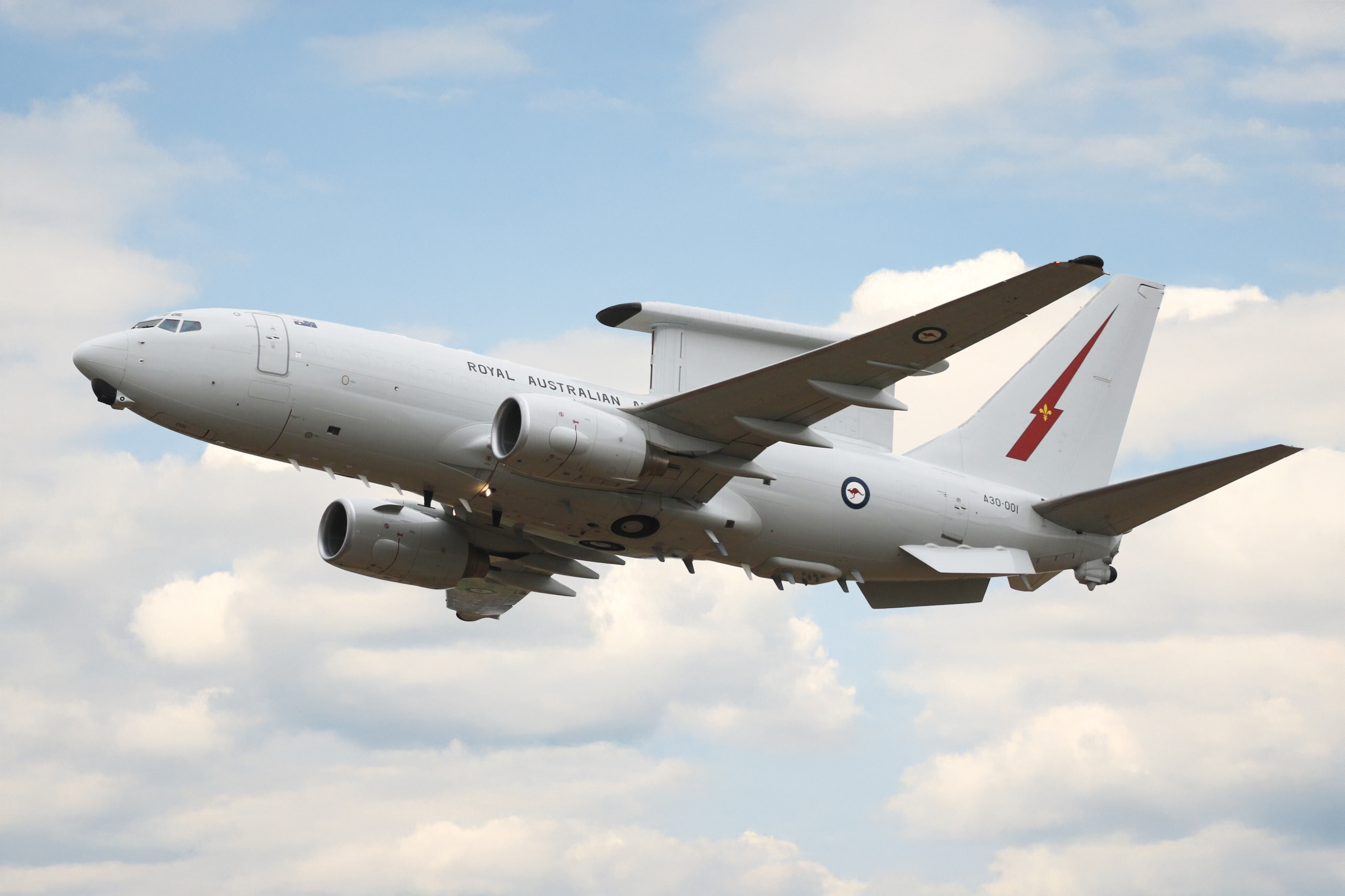
Australia was the first country to adopt the E-7A Wedgetail. Credit: Gordon Arthur
Over a six-month period between late 2023 and early 2024, Houthi militants struck the jugular vein of the global economy in the Red Sea, leading many to reexamine their philosophy for effectual naval warfare in the current threat landscape.
The soft and hard power wielded over modern warships by a non-state actor is not lost on observers. The threat threw a wrench into the risk calculus of the German Navy, which was forced to reroute a frigate and supply ship around the Cape of Good Hope on their return journey from the Indo-Pacific in late 2024.
Still, European navies have learned first-hand some of the new methods of conflict in this bottlenecked inlet. A French Navy FREMM frigate, for example, proved its understanding of the importance of conventional firepower after using a 76-millimetre (mm) main gun to take down a Houthi uncrewed aerial system (UAS) at the fraction of the cost of firing Aster 15 short-range missiles.
A combination of new and conventional threats – uncrewed systems (UxS), cruise missiles, electronic warfare – require navies to rethink layered defences on their warships. This has led to a greater appreciation for protection, balanced with effects.
Experts such as William Freer, research fellow at the Council on Geostrategy, recognised that “naval guns are having a bit of a renaissance” as navies look to protect their assets.
One crucial means of protection at sea is the secondary naval gun (SNG) – an obscure weapon as far as one can categorise the system. SNGs, often operating autonomously, are designed to engage smaller and faster threats that penetrate the inner layer of defence which the larger, primary armament cannot deter.
This additional firepower provides a highly flexible layer of protection, fulfilling various roles as a Close-In Weapon System (CIWS) and as a conventional anti-air or surface warfare system at certain distances.
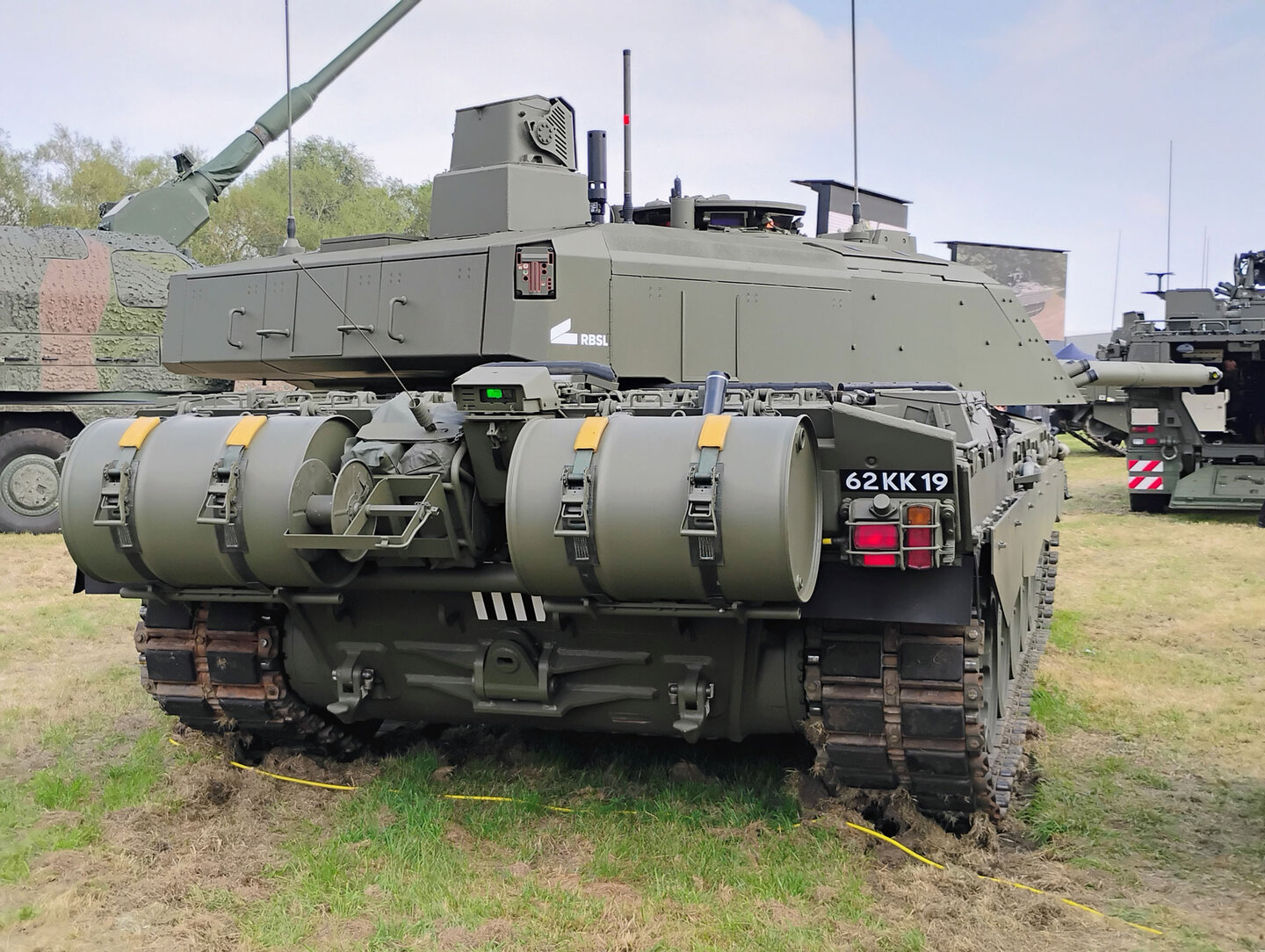
The DroneGun Mk4 is a handheld countermeasure against uncrewed aerial systems. Credit: DroneShield
One key programme that will affect by a number of European operators is the evolution of the Type 212A conventional diesel-electric submarine (SSKs) design. Three nations are building on this legacy model in two different variations: first, the German and Norwegian Type 212 Common Design (CD) and second, Italy’s U212 Near Future Submarine (NFS).
It will also be valuable to examine how these changes differ from the capabilities offered by other European SSK designs, including the Dutch Orka class and Swedish Bleckinge-class submarines.
Gunfire fills gaps
“Cost saving measures during the 1990s and 2000s led to many naval forces overall, as well as ship types individually, having fewer layers of defence,” Freer noted, leaving legacy ships with many gaps to fill. However, the threat landscape has changed considerably.
UxS offer affordable – either disposable or attritable – mass effect against an adversary. This is seen in the Red Sea, as mentioned, but also in the Black Sea where Ukraine destroyed around a third of Russa’s fleet in the region using asymmetric means.
In the age of the joint force, navies can draw observations from gunfire on land, where, for example, the German-made Gepard self-propelled anti-aircraft gun has proved that gun-based defences are viable in a modern environment. They have been useful in destroying a large number of Russian drones and have also, on occasion, destroyed cruise missiles.
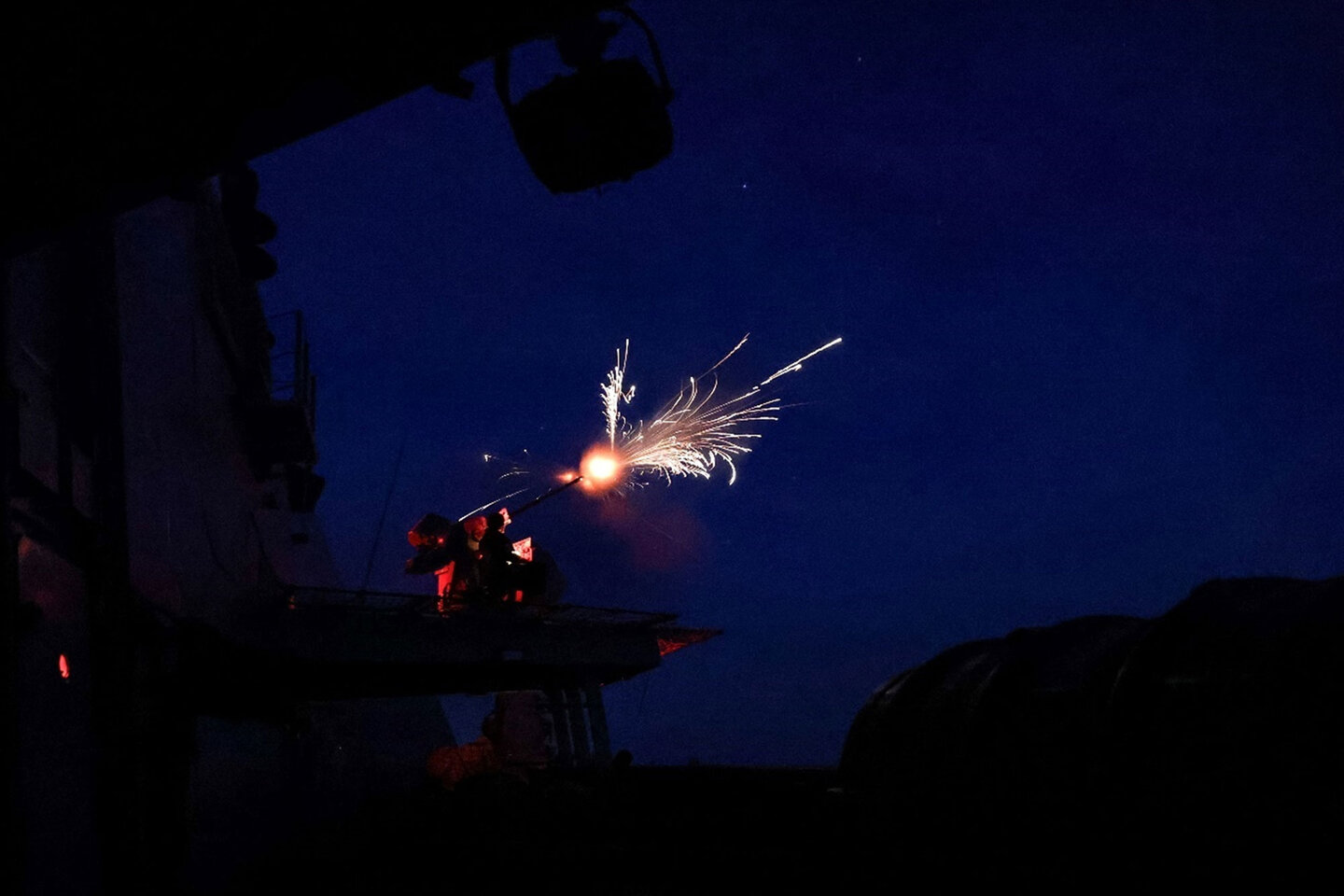
A 30mm gun on HMS Dauntless fires on a UAS target at night. Credit: UK MoD / Crown copyright
But for navies defending against these types of threat it is important to fight a sustainable conflict.
There are threats at the lower end of the scale that it does not makes sense to engage with surface-to-air missiles given the costs you are imposing, both financially and in terms of magazine depth, identified another naval expert, Dr Sidharth Kaushal, research fellow in seapower at the Royal United Services Institute.
“Against certain types of targets, gunfire is going from being the last resort weapon to the priority effector,” Kaushal posited. “That’s the major shift.”
In April 2025, ahead of Operation Highmast – the UK-led Carrier Strike Group to the Indo-Pacific – HMS Dauntless, a Type 45 destroyer, proved the effectiveness of its arsenal, which included the 20mm Phalanx and 30mm DS30M Mk 2 guns, against QinetiQ’s Banshee Whirlwind UAS targets flying overhead at more than 200 miles per hour at night.
Many different roles
SNGs are an elusive weapon system with an extensive capability. While previously SNGs were considered a ‘last-ditch’ countermeasure against threats that creeped too close to a vessel, the utility of these lower cost, lower calibre guns are now resurging in a supplementary air defence role.
However, it is worth noting there is no standard size or layout when it comes to guns – these factors depend on specifics: the mission, national requirements, and the operational environment. This is apparent when comparing British and Polish frigates, whose Inspiration- and Miecznik-lass ships are both based on the same Arrowhead 140 design, although their guns and loadout are different.
Poland opted for an Italian 76mm Super OTO Melara gun from the Italian supplier Leonardo and two domestically made 35mm OSU-35K SNGs while the UK Type 31 frigate features a 57mm Bofors and two 40mm Bofors guns from BAE Systems.
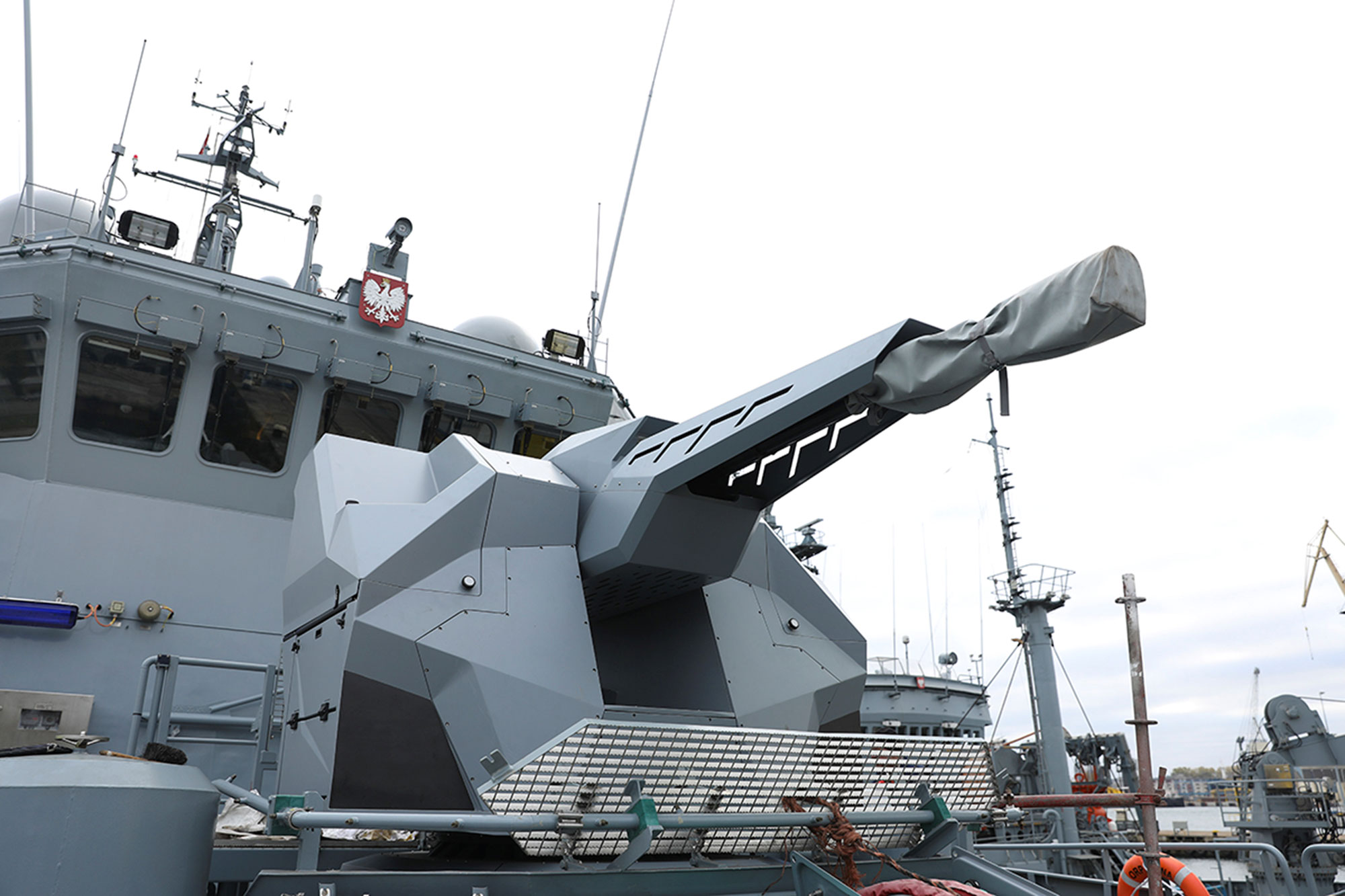
Polish-made OSU-35K secondary naval gun. Credit: Sławomir Lewandowski / Remontowa Shipbuilding
The Polish-made 35mm provides a more rapid rate of fire (550 rounds per minute) than the UK’s 40mm (300 per minute), with the Polish system serving as a CIWS against threats that penetrate the inner layer – between three and five kilometres (km) compared to the 40mm Bofors’ 12.5km range.
Furthermore, the 40mm – which is also an SNG – is more hard-hitting and versatile when it comes to different ammunition types, which is more reliable for air defence at medium altitudes.
Yet the Polish formation provides wider coverage, noted Lorenzo Cozzella, naval product marketing manager at Leonardo, the manufacturer of the 76mm gun:
“The 57[mm] has less weapon head and needs a bigger salvo to achieve the same result as a 76, with a reduced range. As a result, the 76 is a more effective and all-around weapon,” Cozzella argued.
However, the rationale for the unique gun formation on Type 31, comprising similar calibre guns – all three of which, it would be fair to say, constitute SNGs – make the ship a lower-intensity, forward deployed, patrol vessel set to replace Batch II Offshore Patrol Vessels (OPVs). In addition, as it is smaller, the 57mm Bofors will have higher rate of fire.
Poland’s Miecznik frigates, on the other hand, will confront Russian hybrid activity head-on in the contentious Baltic Sea.
Disaggregate or protect?
Autonomy is seeping into navies, bringing with it not only speed in decision-making and effects but also a trade-off between a force structure of disaggregated assets or more warships for protection.
Global Defence Technology has spoken with industry players arguing the disaggregated concept. It has been stated that anything over 3,000 tonnes will come with a propulsion plant, a five inch gun and a navigation radar. This gives a real sense of the number of assets that some suppliers envisage operating unprotected. Others have gone further, contending that the classical surface combatant will soon be extinct altogether.

One solution to this problem would be to include point‑defences on USVs.
William Freer, research fellow at the Council on Geostrategy
The problem of operating disaggregated capabilities – a missile barge or uncrewed surface vessels (USVs), for example – is that these assets could be picked off by the enemy one after another.
“One solution to this problem would be to include point-defences on USVs,” Freer considered, “but this would essentially amount to reinventing the general-purpose frigate,” he concluded in an ironic circle of logic.
However, this does not negate the utility of disaggregation in naval warfare. There is a conversation to be had about whether offensive strike capability might be shifted to other platforms, Dr Kaushal observed.
“There’s a logic that because submarines can fire from unexpected vectors, they don’t face the same air threat that surface vessels do and that frees up [vertical launch system] capacity on destroyers,” he said.
That is the current approach of the Royal Navy, he continued, as inland strike is provided by Tomahawk Land Attack Missiles (TLAMS) launched from Astute-class nuclear-powered attack submarines (SSNs) through torpedo tubes. Meanwhile, the Type 45 has anti-ship missiles, but it does not have a land attack capability at present.
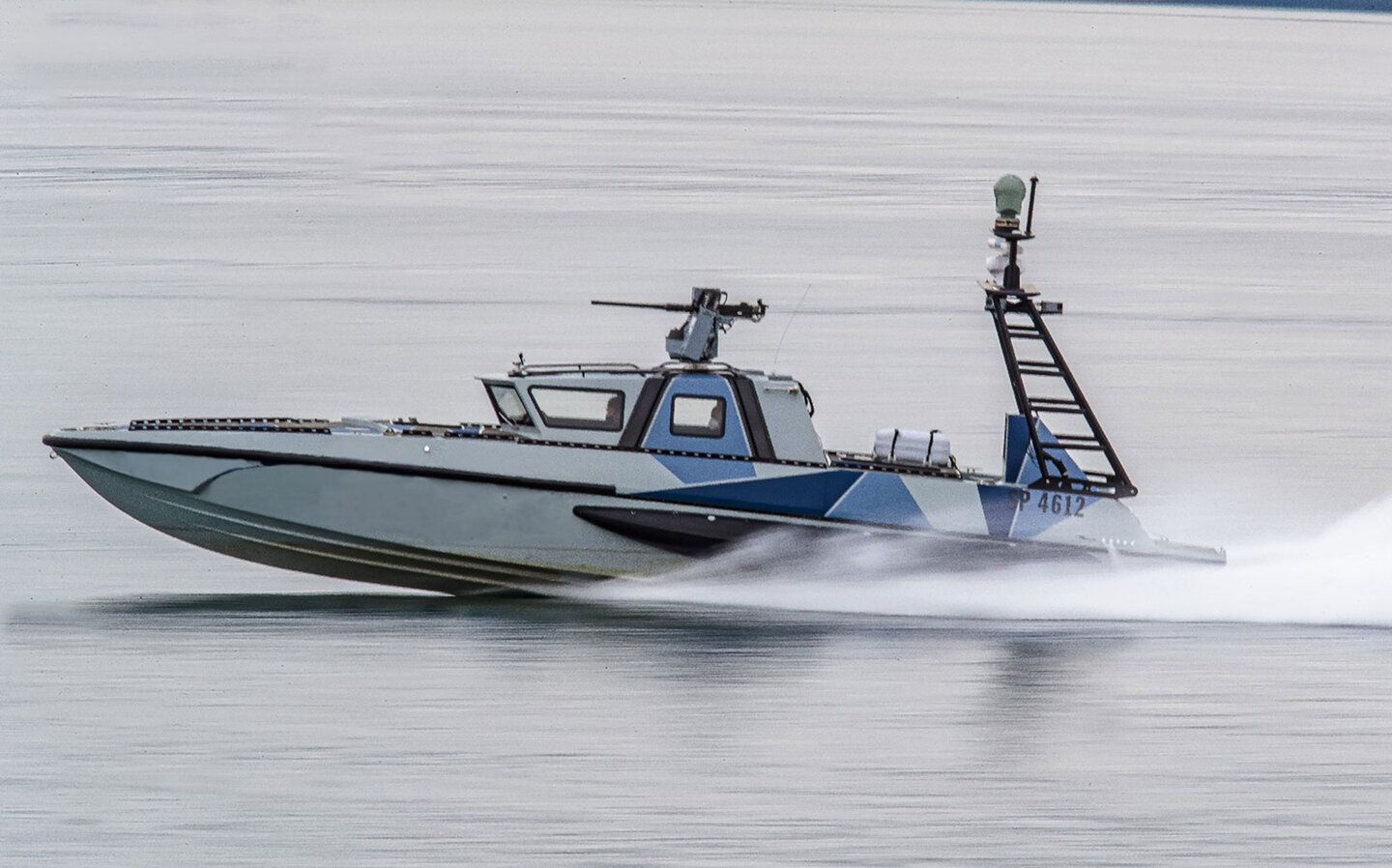
Leonardo 20mm Lionfish SNG fitted to a USV. Credit: Leonardo
“At any given time, there are only so many Astutes at sea,” Kaushal added. “They’re required for a few different missions, and if you're keeping one as a TLAM shooter, that’s one Astute out of a relatively small force” of five, from a planned seven, submarines.
Perhaps this reality influenced the UK decision to increase the multi-billion pound investment in its submarine fleet with the construction of 12 more AUKUS-class SSNs.
Logistics wins wars
For Patrik Selling, director of Naval Sales, BAE Systems Bofors, there are currently maritime conflicts of varying degrees in the Baltic Sea, Black Sea, Red Sea, the Gulf of Aden, North Atlantic, the Arctic, and the Pacific, specifically focused around Taiwan.
“These are areas with large geographical distances and few good bases for logistics,” Selling wrote recently in a paper for the Academy on the Future of the Swedish Navy.
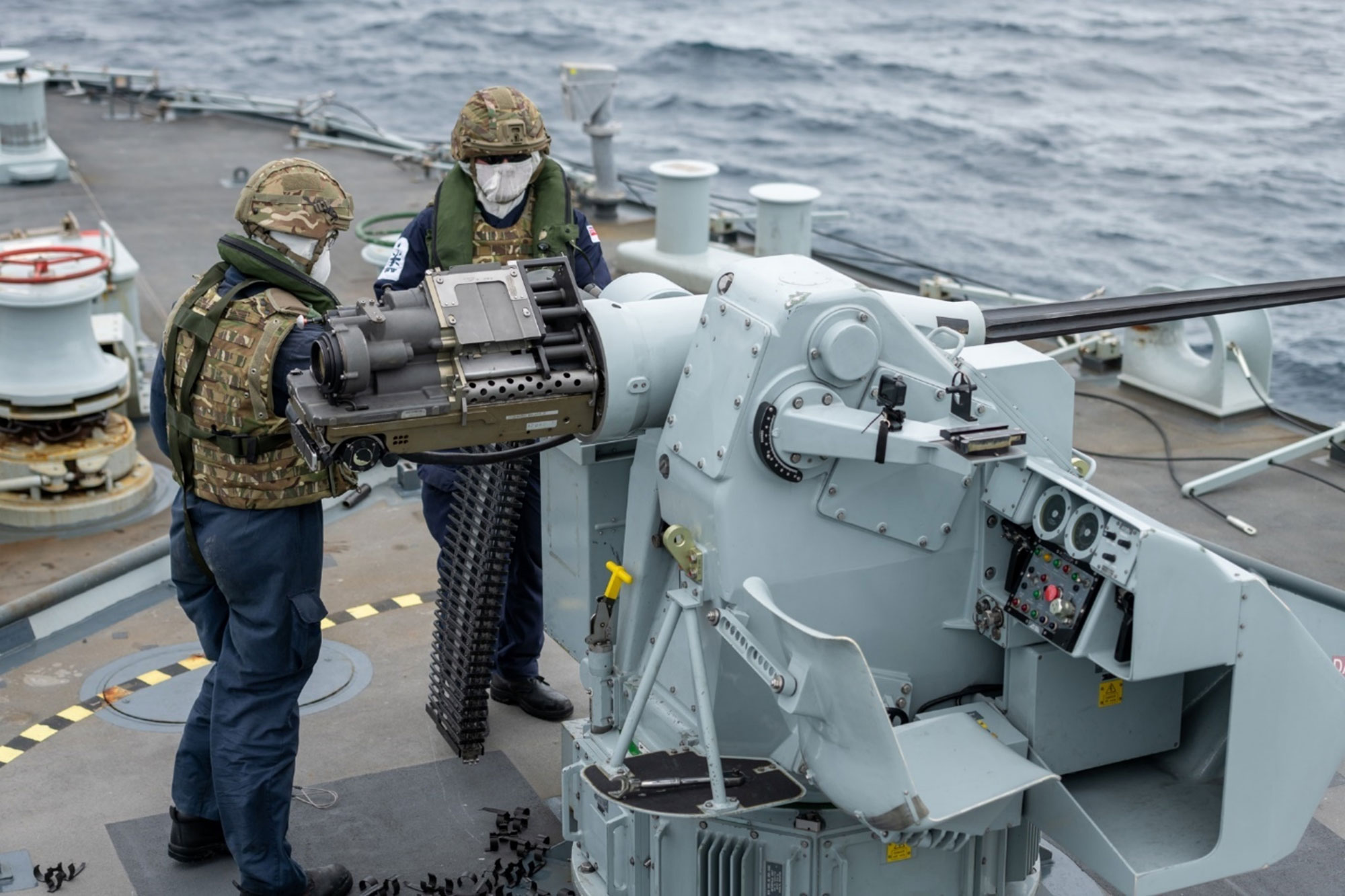
HMS Tamar conducts a 30mm gunnery firing serial in the Sea of Japan in 2022. Credit: UK MoD/Crown Copyright
Thus, navies are troubled by the balance between capability and endurance, “ships must contain many operational options against different types of targets, not least since an ammunition replenishment in the area of operation can be difficult to implement.”
In May, the Royal Navy revealed the level of planning and time it took to replenish several thousand rounds of ammunition for the DS30M Mk 2 gun on HMS Tamar, a Batch II OPV, sailing into the French overseas territory of New Caledonia 14,000 miles away.
Systems must withstand long operating times without the possibility of major overhaul.
Patrik Selling, director of Naval Sales, BAE Systems Bofors
Unlike say the Caribbean, Mediterranean or South Atlantic there is no UK territory in the South Pacific which can serve as a hub to support front-line warship operations.
“The lack of nearby logistics means that ships that will operate in these areas must have a great deal of inherent endurance, that is, the systems must withstand long operating times without the possibility of major overhaul,” Selling stated.
Replenishment will prove to be a continual sore sport for the Royal Navy since its auxiliary fleet has been wittled down to the bare bones.
As of 1 April 2024, when the Royal Navy and the Royal Fleet Auxiliary had 70 ships (57 and 13 respectively), both Conservative and Labour Defence Secretaries have announced the early retirement of seven vessels since then. In total: a frigate, two amphibious assault ships and two tankers.
To modernise the platform, via an April request for information, the USAF is canvassing the inclusion of a new radar, electronic warfare equipment and enhanced
communications to create an “Advanced E-7”. Two such examples are sought within seven years, after which other E-7s could be retrofitted with the modifications.
As for the UK, three 737NG aircraft are currently undergoing modification in Birmingham, the first completing its maiden flight in September 2024.
Global Defence Technology asked Boeing what makes the E-7 stand out, and a spokesperson listing three points. First is its allied interoperability. “With the aircraft in service or on contract with Australia, South Korea, Türkiye, the UK and USA – and selected by Nato – its unmatched interoperability benefits a growing global user community for integration in future allied and coalition operations.”
The US is by far the largest spend on nuclear submarines. Credit: US Navy
Country | 2024 | 2025 | 2026 | 2027 | 2028 | 2029 | 2030 | 2031 | 2032 | 2033 | 2034 |
Australia | 3,582 | 3,586 | 3,590 | 3,594 | 3,613 | 3,622 | 6,183 | 6,207 | 6,216 | 6,239 | 6,380 |
China | 2,607 | 2,802 | 3,040 | 3,081 | 3,174 | 3,291 | 3,396 | 3,603 | 3,664 | 3,710 | 4,316 |
India | 2,320 | 2,533 | 3,675 | 2,457 | 2,526 | 2,639 | 2,741 | 2,873 | 2,958 | 3,350 | 3,560 |
Russia | 2,701 | 2,893 | 2,973 | 3,334 | 3,458 | 3,106 | 3,235 | 3,405 | 2,958 | 3,487 | 3,942 |
US | 16,957 | 18,037 | 18,522 | 18,607 | 18,137 | 18,898 | 18,898 | 19,643 | 19,876 | 22,592 | 23,730 |
Lisa Sheridan, an International Field Services and Training Systems programme manager at Boeing Defence Australia, said: “Ordinarily, when a C-17 is away from a main operating base, operators don’t have access to Boeing specialist maintenance crews, grounding the aircraft for days longer than required.
“ATOM can operate in areas of limited or poor network coverage and could significantly reduce aircraft downtime by quickly and easily connecting operators with Boeing experts anywhere in the world, who can safely guide them through complex maintenance tasks.”
Boeing also uses AR devices in-house to cut costs and improve plane construction times, with engineers at Boeing Research & Technology using HoloLens headsets to build aircraft more quickly.
The headsets allow workers to avoid adverse effects like motion sickness during plane construct, enabling a Boeing factory to produce a new aircraft every 16 hours.
Elsewhere, the US Marine Corps is using AR devices to modernise its aircraft maintenance duties, including to spot wear and tear from jets’ combat landings on aircraft carriers. The landings can cause fatigue in aircraft parts over its lifetime, particularly if the part is used beyond the designers’ original design life.

Caption. Credit:

Phillip Day. Credit: Scotgold Resources
Total annual production
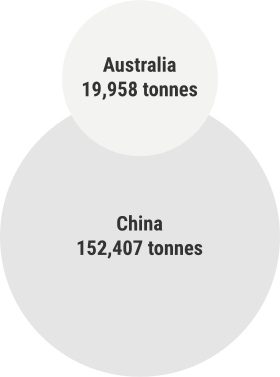
Australia could be one of the main beneficiaries of this dramatic increase in demand, where private companies and local governments alike are eager to expand the country’s nascent rare earths production. In 2021, Australia produced the fourth-most rare earths in the world. It’s total annual production of 19,958 tonnes remains significantly less than the mammoth 152,407 tonnes produced by China, but a dramatic improvement over the 1,995 tonnes produced domestically in 2011.
The dominance of China in the rare earths space has also encouraged other countries, notably the US, to look further afield for rare earth deposits to diversify their supply of the increasingly vital minerals. With the US eager to ringfence rare earth production within its allies as part of the Inflation Reduction Act, including potentially allowing the Department of Defense to invest in Australian rare earths, there could be an unexpected windfall for Australian rare earths producers.
