
Analyst Comment
Disruptive innovation in the EW arms race
Nato countries are coming to terms with an increasingly competitive electronic warfare battlespace.
Powered by


Main image: The US has undergone EW strategic revision and capability growth. Credit: Pixabay
Feature
Taking stock: Europe’s rearmament quest
Europe greases the wheels of ammunition production through innovation and coordination – but is it enough? John Hill reports.
A hypersonic sled travelling at 6,400ft per second during a US test. Credit: US DoD
The electronic warfare (EW) market has seen a resurgence as major players in the global defence market – such as China, Russia, and the US – increase investments in this domain due to a renewed focus on great-power competition and high-intensity conflicts.
Demand for multifunctional and cost-effective EW has noticeably increased since 2017, with the Russian invasion of Ukraine and subsequent illustration of EW’s relevance on the modern battlefield further incentivising global investment in this previously niche capability set.
An EW technological arms race is seemingly unfolding, characterised by increasing investment and procurement, strategic re-evaluations, and force restructuring. However, as these great powers compete for technological overmatch, disruptive EW technologies are arising in arsenals, challenging the efficacy of their rivals’ traditional EW capabilities.
Fibreoptic FPV drones
Improved electronic jamming by Ukrainian forces has stimulated the proliferation of Russian fibreoptic first-person view (FPV) drones in 2024 and 2025, serving as one of Russia’s most recent and disruptive EW innovations.
Unlike wireless drones, fibreoptic drones are connected to operators by a fibre optic cable. Although this system offers a shorter range, fibreoptic drones cannot be electronically jammed, nullifying many electronic protection countermeasures and are cited by the Atlantic Council as crucial to Russia’s counterattack in the Kursk region in 2025, forcing Ukrainian withdrawal.
Specifically responding to this disruptive battlefield technology, in April 2025 the Nato Alliance launched its 16th Innovation Challenge, a partnership between Nato-Ukraine Joint Analysis Training and Education Centre, Nato Allied Command Transformation, and Nato Cooperative Cyber Defence Centre of Excellence.
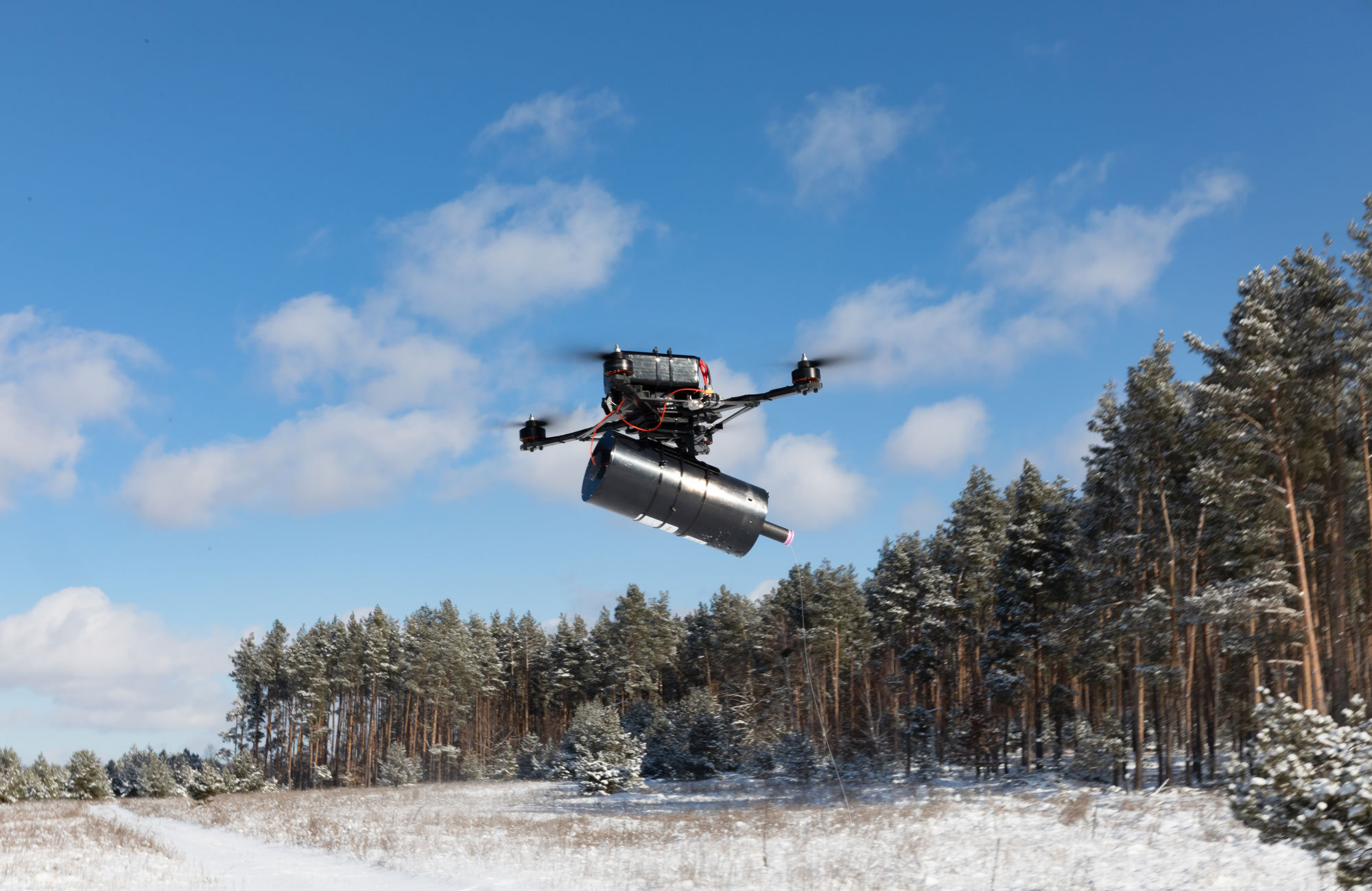
Fibre optic drones are common in Ukraine. Credit: Drop of Light/Shutterstock.com
US-based KMB Telematics won the challenge with a proposal utilising commercial off-the-shelf parts to detect and track low-signature threats, described by Nato as cost-effective, scalable and swiftly integrable with Nato platforms.
Sentradel, also from the US, was awarded second place with an AI and sensor fusion-based autonomous turret, described as field-ready through its adaptable payloads, modularity, and integration with Nato platforms.
DONS, a Ukrainian defence-technical startup in Brave1, a financial, informational and organisational support programme within the Ukrainian defence tech industry, came third. Combining ballistic calculation with AI detection and thermal tracking, the proposal offered a stabilised Remote Weapon Station, protecting infrastructure and personnel from FPV drones.
Nato’s 16th Innovation Challenge highlighted the need for modernising militaries and defence contractors to depart from solely traditional procurement demand themes, diversifying with niche and disruptive approaches.
It has simultaneously demonstrated that the implementation of AI to enhance EW systems, as well as Nato integration with fast fielding potential, has increased proposal appeal to the alliance.
Storm Eye
Like Russia, China is actively refining its EW capabilities. The 2022 launch of the People’s Liberation Army Navy’s (PLAN) Fujian aircraft carrier, utilising an electromagnetic launch system, will host a number of EW-capable platforms, including the PLAN’s new Airborne Early Warning aircraft.
Complimenting the J-15 fighter, a catapult-compatible J-15, tandem-seat J-15S and EW variant J-15D are all in development.
Additionally, the Strategic Support Force (SSF), specialising in the military space, EW, and cyber domains with similar status to the PLA Navy, dissolved in 2024 into the Aerospace Force (ASF), Cyberspace Force (CSF), and Information Support (ISF). The CSF conducts information warfare, including EW, whilst the ASF is responsible for military space and counterspace.

China is improving its EW capabilities. Credit: DC Studio/Shutterstock.com
Finally, the ISF supports PLA communications and network information systems. The ASF, CSF, and ISF all now operate under the PLA Central Military Commission, reflecting ongoing force refinement to enhance the Chinese Communist Party’s (CCP) military versatility.
However, China is also pursuing less conventional forms of EW innovation. In July 2025, reports emerged regarding a revolutionary EW concept known as ‘Storm Eye’, which may provide China’s PLA with a specific EW advantage over its US rival.
The Chinese peer-reviewed journal Acta Electronica Sinica details the technology behind the innovative system. Described as utilising two drones with variable but corresponding jamming and counter-signalling frequencies to cancel each other out, Storm Eye creates an area of relief from electronic disruption.
Unlike more traditional EW jamming systems, which can unintentionally hamper friendly assets through their omnidirectionality, Storm Eye’s specific zonal protection removes this collateral risk. While accurate intelligence on this system is difficult to conduct due to the opaque nature of the CCP, the US will likely have to adopt similarly unorthodox methods to match and outcompete its strategic rival and peer competitor.
MQ-9 Reaper drone
As with Russia and China, the US has undergone EW strategic revision and capability growth. While its cross-branch EW systems boast a wide array of operational use, specific platforms offer insight into how the US is innovating to outmanoeuvre its arguably technologically superior adversaries.
In 2024, The War Zone (TWZ) reported that the US Marines Corps’ (USMC) MQ-9 Reaper drone received a significant EW upgrade. The MQ-9 has been fitted with a Reaper Defense Electronic Support System/Scalable Open Architecture Reconnaissance (RDESS/SOAR) system.
General Eric M Smith described the General Atomics EW pod as able to “mimic” and return incoming signals, enabling the MQ-9 to “disappear off enemy radar”.
The RDESS/SOAR stems from SOAR by General Atomics and L3Harris, which delivers ‘standoff surveillance’, or the ability for threats to be identified before the aircraft is detected by the enemy.
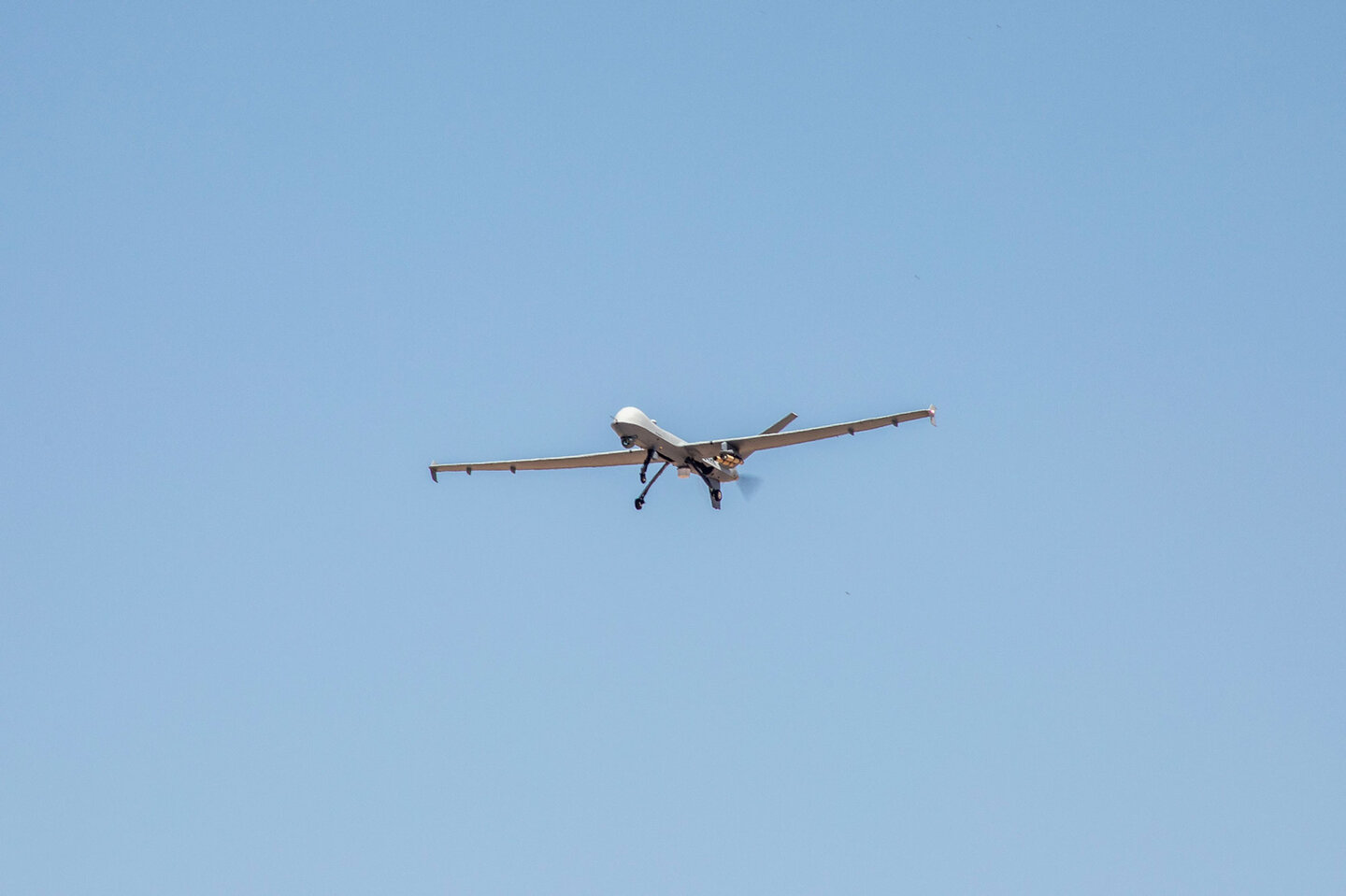
The US is upgrading EW in its MQ-9 Reaper drones. Credit: US Army
Although details of the RDESS/SOAR pod have not been publicly disclosed, given that the USMC has stationed MQ-9s in Hawaii to observe China in the Indo-Pacific, as TWZ outlines, the implementation of this novel technology will seemingly help the USMC’s small MQ-9 fleet remain tactically competitive with key adversaries.
Despite its status as the leader of global EW spending, the US debatably trails to competitors in EW development. Given the innovation of China and Russia, the US’ geopolitical rivals, especially the revolutionary nature of China’s ‘Storm Eye’, advanced EW upgrades to platforms, like the MQ-9 shielding from enemy detection, will be critical to maintaining parity.
This sets a precedent for the industry to ensure that proposals can offer the highest level of disruptive and/or novel innovation at the greatest speed to deliver critical battlefield advantages and maintain operational suitability.
It is likely that diversification within EW portfolios will increase in the coming years, reflecting the full-spectrum nature of increasingly complex battlefields and shorter innovation cycles.

The idea is to make the testing as realistic as possible.
Douglas Schmidt, former director of OT&E
“That kind of decoupling is a lot more complicated than people would want to implement, and it's also a really expensive affair because it's not about just stopping the acquisition of new weapons. It's also about what you do with all of the training, the infrastructure, the planning for all of these contracts that are meant to last.”
Any breakup will also be painful for the US firms, which rely on partners to co-invest in research and systems development. The development and construction of F-35s is a project among allies, with components manufactured outside the US, including in Denmark and the United Kingdom.
“I think Lockheed Martin – as would the different subcontractors – would be very upset if there was any instability in the projected purchases of the F-35 from other countries,” said Bert Chapman, a professor at Purdue University and author of Global Defense Procurement and the F-35 Joint Strike Fighter.

Caption. Credit:

Phillip Day. Credit: Scotgold Resources
Total annual production
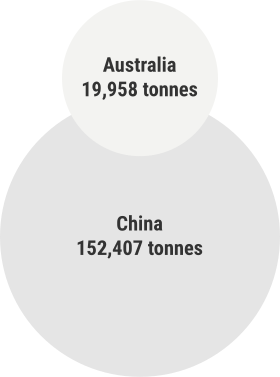
Australia could be one of the main beneficiaries of this dramatic increase in demand, where private companies and local governments alike are eager to expand the country’s nascent rare earths production. In 2021, Australia produced the fourth-most rare earths in the world. It’s total annual production of 19,958 tonnes remains significantly less than the mammoth 152,407 tonnes produced by China, but a dramatic improvement over the 1,995 tonnes produced domestically in 2011.
The dominance of China in the rare earths space has also encouraged other countries, notably the US, to look further afield for rare earth deposits to diversify their supply of the increasingly vital minerals. With the US eager to ringfence rare earth production within its allies as part of the Inflation Reduction Act, including potentially allowing the Department of Defense to invest in Australian rare earths, there could be an unexpected windfall for Australian rare earths producers.
